




Soccer heading may increase concussion risk
Posted: May 5, 2025
Soccer concussion symptoms can happen when someone's head strikes an object such as another player or the ground while playing sports. [caption id="attachment_10787" align="alignright" width="450"]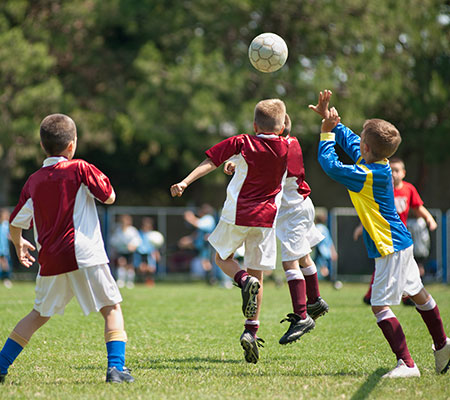 Youth soccer rules limit heading for players 13 and younger because of possible concussion risk.[/caption]
In soccer, players purposely make head-to-object contact when they head the soccer ball.
"Heading puts you in a position to accidentally collide with another player, which is known to cause concussions," said Makenzie Ward, a Marshfield Clinic athletic trainer.
Heading the ball improperly, like when a player doesn't have enough time to react, also can cause a concussion.
Youth soccer rules limit heading for players 13 and younger because of possible concussion risk.[/caption]
In soccer, players purposely make head-to-object contact when they head the soccer ball.
"Heading puts you in a position to accidentally collide with another player, which is known to cause concussions," said Makenzie Ward, a Marshfield Clinic athletic trainer.
Heading the ball improperly, like when a player doesn't have enough time to react, also can cause a concussion.
Avoiding a concussion from heading a soccer ball
Heading poses a risk for concussion if the soccer ball is traveling at high speeds. More commonly, a concussion can come from head-to-head contact from players or hitting your head on the ground when falling. Players can decrease soccer concussion risk with proper heading technique:- Bend your knees and bend backwards at the waist to use your body to generate power.
- Jump to meet the ball rather than letting it hit you.
- Keep your eyes open and locked on the ball.
- Try to hit the center of the ball with your forehead, just below the hairline.
Watch for concussion symptoms
Coaches and referees are trained to recognize concussion signs, but parents also should know the symptoms. Headache, dizziness, weakness, confusion and vision changes after impact to the head signal concussion. Concussion signs may not appear until a few hours after the injury, and children may not let you know they have symptoms. Ask your child about signs of concussion after heading the soccer ball in practice or games. Let your child's coach know if symptoms develop and have the child checked by the school's athletic trainer. The player should sit out of play until they are assessed and are cleared to return. "The biggest risk for someone with a concussion is to continue playing," Ward said. "The brain is vulnerable to a worse concussion and second impact syndrome until it's healed."Rules limit heading in youth soccer
U.S. Club Soccer released heading rules to reduce concussion risk for young athletes. Players under age 11 aren't allowed to head the ball at all in practice or games. Players ages 12-13 must limit their heading practice to no more than 30 minutes and 15-20 headers per week. The rules aren't required for all youth soccer leagues, but Ward said other leagues should consider limiting headers to a certain number per week for younger players. The WIAA doesn't limit heading for high school players. [divider]For immediate care, visit Marshfield Clinic Health System.
[su_button style="default" background="#003E51" size="6" url="https://marshfieldclinic.org/locations/search?k=+UrgentCareLocationOWSBOOL:1" target="_self"]Find an urgent care location[/su_button] [su_button style="ghost" background="#003E51" color="#003E51" size="6" url="https://marshfieldclinic.org/locations/search?k=emergency" target="_self"]Find an emergency department location[/su_button]
[divider]