




Is skiing or snowboarding safe? Tips for your next adventure
Posted: February 19, 2025
Slicing through powdery snow and racing past ice-covered pines. It's a thrill that draws skiers and snowboarders to the slopes every winter, but is skiing or snowboarding safe? [caption id="attachment_10356" align="alignright" width="450"]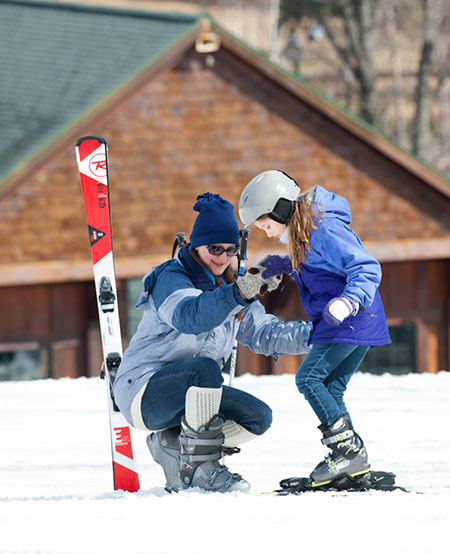 Stay on slopes marked for your ability level to avoid skiing and snowboarding injuries.[/caption]
Unfortunately, this thrill lands some winter sports enthusiasts in the emergency department.
"Knee injuries are most prevalent among skiers," said Dr. Darren Corteen, a Marshfield Clinic Health System orthopedic surgeon and sports medicine physician. "It could be a sprain, torn ACL or other ligament tear."
Snowboarders are more likely to suffer upper extremity injuries like broken wrists.
"Head injuries can happen to skiers and snowboarders who don't wear helmets," he said. "They're more common among snowboarders, who tend to be younger and take more risks."
Stay on slopes marked for your ability level to avoid skiing and snowboarding injuries.[/caption]
Unfortunately, this thrill lands some winter sports enthusiasts in the emergency department.
"Knee injuries are most prevalent among skiers," said Dr. Darren Corteen, a Marshfield Clinic Health System orthopedic surgeon and sports medicine physician. "It could be a sprain, torn ACL or other ligament tear."
Snowboarders are more likely to suffer upper extremity injuries like broken wrists.
"Head injuries can happen to skiers and snowboarders who don't wear helmets," he said. "They're more common among snowboarders, who tend to be younger and take more risks."
Snowboard and ski safety
Corteen recommends these tips to reduce chances of injury while skiing or snowboarding:- Use proper equipment. Get skis and bindings that fit, wear a helmet and use wrist guards if you're snowboarding.
- Stick to slopes in your ability level. Move to the side and sidestep your way down if you find yourself on a hill more advanced than you can handle.
- Ski only in marked areas. Venturing out of bounds or onto closed slopes increases your risk of injury and makes it harder for ski patrol to find you if you're hurt.
- Be aware of other skiers. Also pay attention to obstacles in your path and signs marking the slopes.
When to get help for an injury
Hearing or feeling a pop probably means you have a bone or joint injury. If you get hurt on the slope, move to the side of the hill as soon as possible. Slowly make your way to flat ground if you can, or flag someone down to alert the ski patrol. Get medical help right away if you have any of these symptoms:- Head or neck pain
- Deformity in the injured area
- Numbness in the injured area
- Inability to move the body part
More skiing and snowboarding safety tips
Broken bones aren't the only risk that come with skiing. Here are more safety tips to consider:- Dress for the occasion. Wear a wicking layer that absorbs sweat, a thin wool or fleece layer to keep you warm and a wind- and water-resistant outer layer. Don't forget a hat and gloves.
- Wear eye protection to keep sun and snow out of your eyes. Skiing is safer when you can see.
- Skip the spiked hot chocolate. Sports and alcohol don't mix well. Stick to non-alcoholic drinks in the ski lodge.
For more information about skiing and snowboarding safety, talk to a Marshfield Clinic primary care provider.
[su_button style="default" background="#003E51" size="6" url="https://marshfieldclinic.org/appointments" target="_self"]Schedule appointment[/su_button] [su_button style="ghost" background="#003E51" color="#003E51" size="6" url="https://marshfieldhealth.iqhealth.com/" target="_self"]Message your provider[/su_button]
[divider]