




Art therapy can be part of cancer care
Posted: June 27, 2017
[caption id="attachment_10993" align="alignright" width="450"]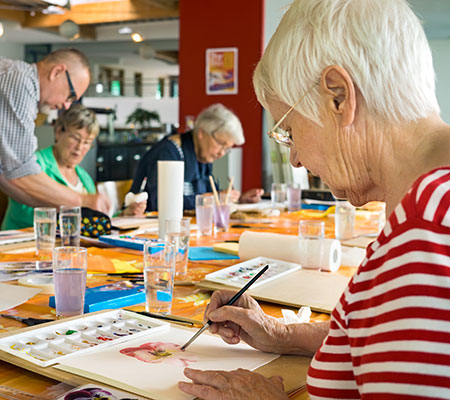 Art therapy can help you express emotions you don't know how to put into words or don't want to talk about.[/caption]
Drawing, painting and other forms of artistic expression can improve quality of life for people with serious medical conditions like cancer.
How is that possible?
"Art therapy helps people manage the emotional and psychological side effects of a cancer diagnosis and treatment," said Amanda Boreen a Marshfield Clinic registered nurse. Boreen is a breast care coordinator and facilitator for Women Living with Hope, a breast cancer support group. The group offers art therapy to its members several times a year.
Creating art can help patients cope with the difficult emotions like uncertainty, anger and anxiety, improve self-esteem and enhance feelings of wellbeing.
Art therapy can help you express emotions you don't know how to put into words or don't want to talk about.[/caption]
Drawing, painting and other forms of artistic expression can improve quality of life for people with serious medical conditions like cancer.
How is that possible?
"Art therapy helps people manage the emotional and psychological side effects of a cancer diagnosis and treatment," said Amanda Boreen a Marshfield Clinic registered nurse. Boreen is a breast care coordinator and facilitator for Women Living with Hope, a breast cancer support group. The group offers art therapy to its members several times a year.
Creating art can help patients cope with the difficult emotions like uncertainty, anger and anxiety, improve self-esteem and enhance feelings of wellbeing.
A different way to express emotions
Art helps express emotions that are hard to put into words or that you don't want to talk about. Getting those feelings out can be a relief. "It's amazing what emotions come out when you start art therapy," Boreen said. "Many people don't realize the stress and uncertainty they had bottled up inside. The women often are surprised at how good they feel after a session." Creating something that represents happiness can redirect your thoughts to something positive. Art therapy also may distract you from physical ailments such as pain caused by a serious illness or treatment. The act of creating art with friends, family or people going through similar experiences can bond you and create good memories during a hard time, said Gretchen Kluz, art studio owner. Kluz leads art therapy sessions for Women Living with Hope and in her own studio.No art experience needed
Many people who try art therapy aren't experienced artists and are unsure of their abilities. You don't need any special skills to participate in art therapy. There is no wrong way to be artistic. The purpose of art therapy is the process, not the final product.I've never had a participant say they had a bad experience," Boreen said. "Everyone is proud of their accomplishments. Part of that is because they put so much thought and feeling into their work."A session may start with a cue, like "Draw what you're feeling right now," or "Paint a picture of a relaxing space." "Instructors can provide as much or as little guidance as you need," Kluz said. "Sometimes people need to sit and talk or cry while they work. Some people need calm, quiet time."