




Is it safe? Dietary supplements and patients with cancer
Posted: August 30, 2019
[caption id="attachment_13975" align="alignright" width="450"]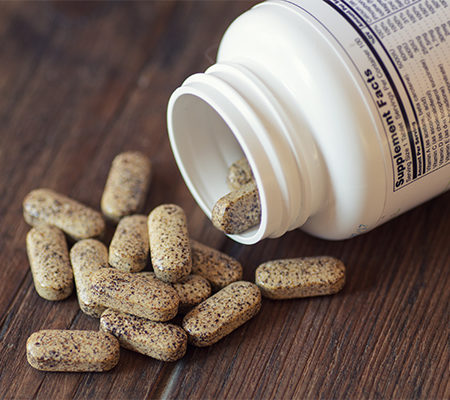 While dietary supplements are usually safe when you are healthy, they can cause problems if you are undergoing cancer treatment.[/caption]
There are many dietary supplements out there – vitamins, minerals, herbals, enzymes and more. Most of these are safe when you are healthy, but supplements can cause problems if you are undergoing cancer treatment.
"In general, we recommend staying away from dietary supplements when you are undergoing cancer treatment because there are so many unknowns," said Kelly Johnson, oncology dietitian with Marshfield Clinic Health System. "If you have any questions, you should talk to your oncologist."
Just like drugs, dietary supplements have risks and side effects. However, the Food and Drug Administration does not control dietary supplements. This means there is no way to tell what you are really eating. Dietary supplements may:
While dietary supplements are usually safe when you are healthy, they can cause problems if you are undergoing cancer treatment.[/caption]
There are many dietary supplements out there – vitamins, minerals, herbals, enzymes and more. Most of these are safe when you are healthy, but supplements can cause problems if you are undergoing cancer treatment.
"In general, we recommend staying away from dietary supplements when you are undergoing cancer treatment because there are so many unknowns," said Kelly Johnson, oncology dietitian with Marshfield Clinic Health System. "If you have any questions, you should talk to your oncologist."
Just like drugs, dietary supplements have risks and side effects. However, the Food and Drug Administration does not control dietary supplements. This means there is no way to tell what you are really eating. Dietary supplements may:
- Sometimes be tainted with germs, pesticides or toxic heavy metals.
- Sometimes not contain what is listed on the label.
- Sometimes contain more or less than the amount claimed on the label.
Side effects of dietary supplements
Even if you get a quality dietary supplement, many known side effects can be troubling when paired with cancer treatments. For instance, some dietary supplements can cause skin sensitivity and severe reactions when taken during radiation treatment. Dietary supplements also increase the risk for drug interactions if taken with chemotherapy. For example:- Some components of green tea may counteract the anticancer effects of a cancer therapy called Bortezomib (Velcade®).
- John's Wort has been known to reduce the amount of certain cancer therapies in the blood. If this happens, you may have less cancer medicine than you need to treat the cancer.
- Some studies show that taking antioxidant supplements such as Vitamin C and Vitamin E can interfere with cancer treatment and may actually protect the cancer cells from treatment, thus reducing the effectiveness of treatment.