




Bike helmets: 3 things to know
Posted: July 10, 2024
It can be hard to get your child or teen to wear a bike helmet, but it is the most important thing your child should wear when going for a ride. According to Safe Kids Worldwide, bike helmets are the best way to lower head injury and death from bike accidents. [caption id="attachment_15061" align="alignright" width="450"]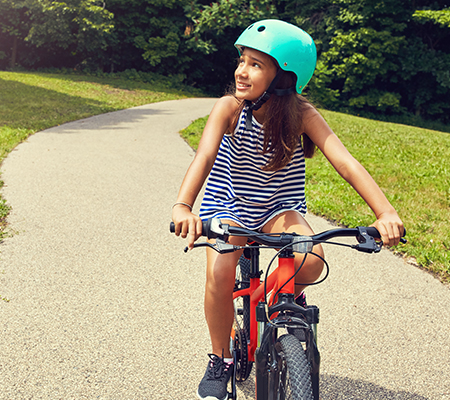 Helmets are the most effective way to prevent head trauma and death due to bike crashes.[/caption]
In 2020, the CDC reported that there were 136,765 non-fatal bike injuries to kids in the United States. In that same year, 102 children died in bicycle accidents. Children ages 5-14 are at the greatest risk for bicycle injury.
According to a 2018 study on bicycle helmet effectiveness, helmets can reduce the risk of:
Helmets are the most effective way to prevent head trauma and death due to bike crashes.[/caption]
In 2020, the CDC reported that there were 136,765 non-fatal bike injuries to kids in the United States. In that same year, 102 children died in bicycle accidents. Children ages 5-14 are at the greatest risk for bicycle injury.
According to a 2018 study on bicycle helmet effectiveness, helmets can reduce the risk of:
- Head injury by 48%
- Brain injury by 53%
- Facial injury by 23%
- Fatal injury by 34%
Size is very important
You should make sure your child is with you when you pick out a bike helmet to ensure proper sizing. Studies have shown that children who wore poorly fitting helmets had double the risk of head injury compared with those who wore properly fitting helmets. This is especially true with those who had helmets that were tipped posteriorly, meaning too much forehead was exposed. When buying a bike helmet for your child or teen, it should fit snug on the head without giving the child a headache. When your child is wearing their helmet:- The helmet should rest just above the eyebrows and not slide around on the head. Use the foam pads to raise or lower the helmet or pad the space if needed.
- The straps of the helmet should be adjusted to form a "Y' just under the ear of the child.
- The chin strap should be tight enough to pull down on the helmet when the child opens their mouth wide.
- They should be able to see the helmet if they look up.