When to worry about bowlegs in toddlers and growing children
Posted: February 7, 2020
Your baby's legs will change as they grow. Bowlegs and knock-knees are a normal part of their child's development. But how do you know when it's just a phase – and when is it something to worry about?What is a bowlegged baby?
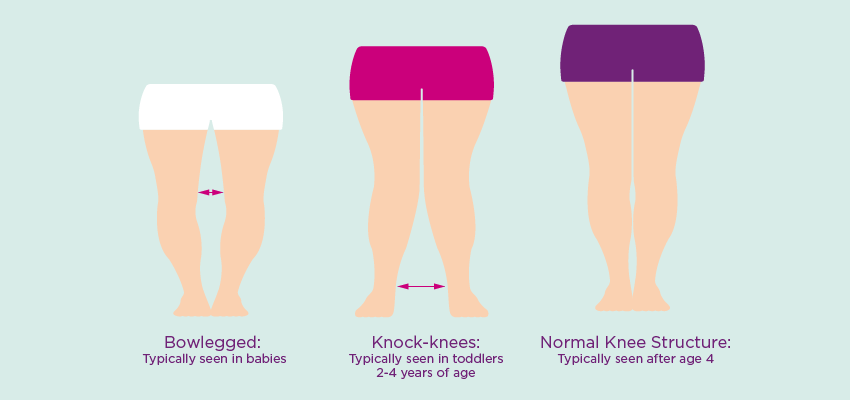
A bowlegged baby stands or walks with knees farther apart than their ankles, giving the appearance of having just stepped off a horse. It is called "varus" alignment. On the opposite side of the spectrum, a person with knock-knees walks with knees touching, even when their feet are apart. This is called "valgus" alignment. [caption id="attachment_14584" align="alignright" width="450"] Babies are typically bowlegged because that's the way our legs naturally develop. Over time, our legs straighten as we bear weight and grow taller.[/caption]
Bowlegs and knock-knees are usually part of normal development.
Babies are typically bowlegged because that's the way our legs naturally develop. Over time, our legs straighten as we bear weight and grow taller. Then, children tend to become knock-kneed from ages 2-4. Their legs gradually straighten again to the expected few degrees of knock-knee that we have as adults. "So, bowlegs in a 13-month-old is usually normal, but bowlegs in a 3-year-old is not," said Dr. Rachel Randall, Marshfield Children's pediatric orthopedic surgeon. "On the other hand, noticeable knock-knees in a 3-year-old is usually normal, but significant knock-knees in a 10-year-old requires investigation of an underlying cause." In some cases, influencing factors to abnormal bone growth include:- Genetics
- Rickets
- Blount's disease (a growth disorder of the shinbone)
- Injuries to the bone
- Radiation treatments for cancer or infection around the growth plates
When to worry about bowlegs in toddlers
While most children grow out of it, there are signs that may indicate a more serious issue. These include:- Extreme curvature
- It affects only one leg
- It happens later in childhood
- It becomes more noticeable over time